Introduction
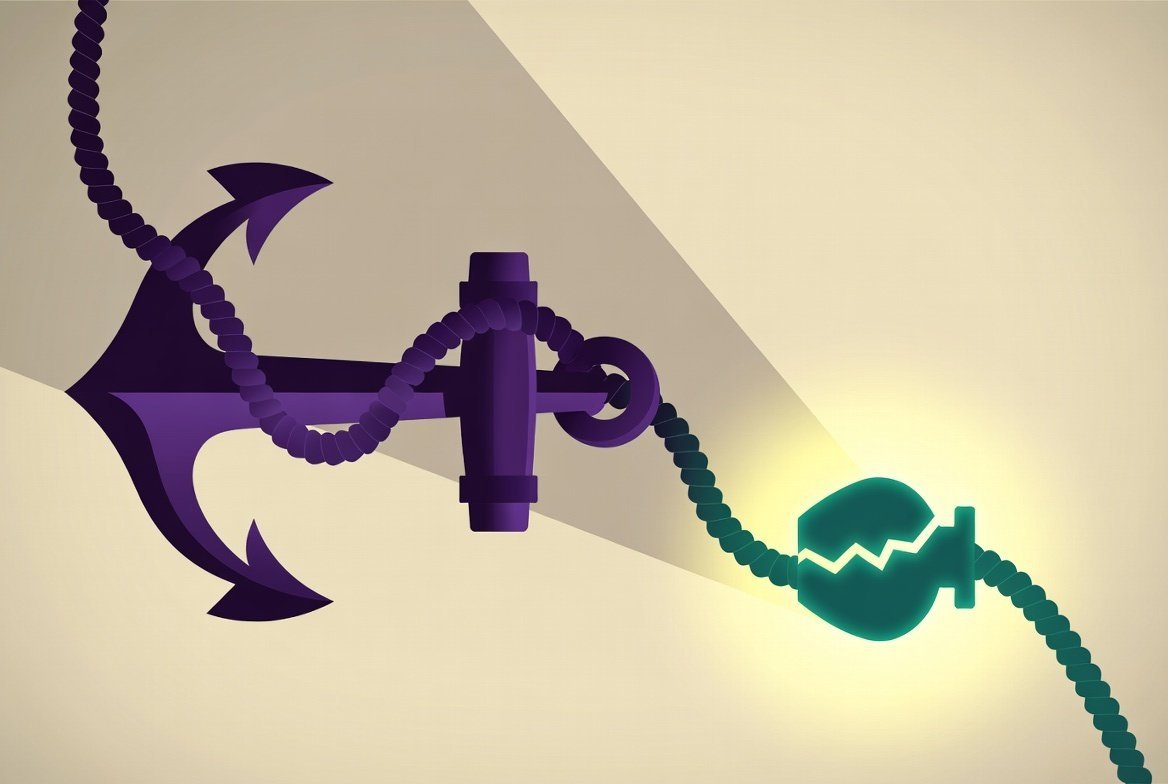
Most people spend years trying to understand their addiction — the substance, the cravings, the relapses, the consequences. All of that matters. But eventually, a deeper question tends to surface: what was the addiction actually helping me cope with? Because addiction is rarely just a behavior. Most of the time, it’s a coping strategy — not a healthy one, not an effective one long-term, but a coping strategy nonetheless. That underlying need is what we call a Coping Anchor: an emotional struggle that repeatedly pushes you toward the addictive behavior in search of relief.
Addiction Usually Starts as a Solution
This is uncomfortable to admit, but important: most addictions begin because they actually work, at least for a while. They provide relief, escape, comfort, confidence, connection, silence — something real. The problem is that temporary solutions have a habit of becoming long-term problems, quietly creating new damage while you’re still leaning on them to solve the old stuff.
Relief is one of the strongest teachers the brain has. If a behavior reduces discomfort — even briefly — your brain remembers, and starts recommending the same move whenever a similar feeling shows up. That’s not weakness. That’s learning. The catch is that the brain doesn’t automatically check whether the solution is actually good for you. It just checks whether it worked.
Spotting Your Own Pattern
Coping isn’t the problem — every human being copes with something. The real question is how. Healthy coping might look like talking to someone, exercise, prayer, journaling, rest, or creativity. Unhealthy coping usually offers faster relief at a much higher long-term cost. The need itself is completely normal. It’s the method that needs attention.
A lot of people eventually notice they have predictable emotional triggers — anxiety leading to vaping, loneliness leading to drinking, shame leading to porn, boredom leading to gambling. The exact pairing is different for everyone, but recognizing your own version of the pattern is usually the turning point.
The Addiction Might Not Be the Real Problem
Sometimes the addiction isn’t the deepest issue — it’s the strategy used to manage the issue. Picture a bucket catching water from a leaking roof: the bucket is what you see, but the leak is what’s actually causing the problem. Pull the bucket without fixing the leak, and you’ve just created a new mess. Recovery usually needs to address both — the behavior, and whatever it’s been covering for.
A lot of addiction is built around avoidance — of a feeling, a memory, a fear, a truth. Avoidance works for a while, which is exactly why it’s so tempting. But whatever gets avoided tends to wait. The longer it’s avoided, the bigger it can start to feel. At some point, recovery usually means learning that hard emotions can actually be faced instead of endlessly outrun.
Building Something New
New coping skills almost always feel awkward at first, and that’s normal — of course a brand-new tool feels clumsier than a habit you’ve practiced for years. One of addiction’s best tricks is convincing you there’s only one way to feel better, relax, or escape. Recovery slowly proves that wrong by expanding the menu: more sources of relief, more ways to connect, more paths forward than you thought you had.
Here’s the useful twist: the same need that once pushed you toward addiction can eventually pull you toward healing. Stress can lead to exercise instead of escape. Loneliness can lead to real connection instead of isolation. The anchor doesn’t have to disappear — it just needs a new direction.
A Question Worth Asking
Next time a craving shows up, try pausing on these: what am I actually trying to change right now? What feeling am I hoping to escape? What need am I really trying to meet? The craving is rarely just about the craving — it’s usually pointing at something underneath it. Understanding the need is often where the real work of healing starts.