Introduction
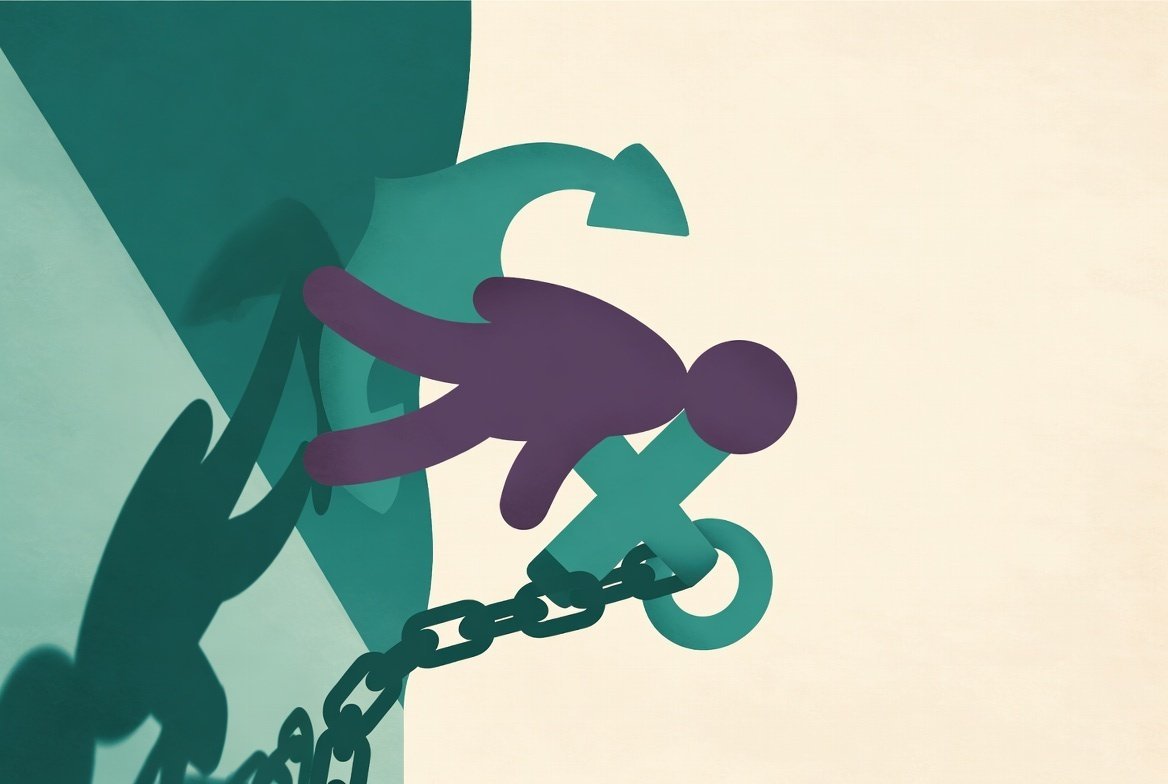
When people think about addiction, they usually focus on cravings, habits, and substances. What’s less obvious is how much of it is actually connected to fear — not fear of the addiction itself, but fear of what life might look like without it. Fear can become its own anchor: something that quietly holds you in place long after you’ve decided you want to change. We call this a Fear Anchor — a fear that keeps pulling you back toward a familiar pattern, even when that pattern is hurting you.
Why Fear Feels So Convincing
Fear exists for a reason: its job is protection, and your brain is constantly scanning for what could go wrong. That’s genuinely useful when there’s real danger. The problem is that fear is bad at telling the difference between discomfort and actual danger, between change and threat, between uncertainty and catastrophe — so it ends up protecting you from things you actually need.
Common Fear Anchors in recovery include fear of failure, fear of success, fear of rejection, fear of loneliness, fear of discomfort, and fear of change itself. None of these are signs of weakness — they’re just human. The trouble starts when fear quietly starts making your decisions for you.
The Fear of Life Without It
One of the most common fears in recovery is simple: who will I be without this? The addiction may be harmful, but it’s also familiar — you know how life works with it. Life without it is unknown territory, and unknown territory is frightening almost by default. The fear usually isn’t really about losing the addiction. It’s about facing whatever shows up once it’s gone.
That includes feelings the addiction had been keeping at a distance. As those become more visible in recovery, people start asking: what if I can’t handle the anxiety, what if the sadness never lifts, what if I fall apart? Reasonable fears — and a lot of people are surprised to discover the feelings they were most afraid of turned out to be survivable. Difficult, but survivable.
Fear of Failing — and Fear of Succeeding
Fear of failure is one of the strongest Fear Anchors out there: what if I try and fail again, so why bother trying at all. Avoiding failure ends up meaning avoiding growth too, even though recovery rarely demands certainty — just willingness.
Fear of success surprises a lot of people, but it’s just as common. What if I actually change, what if people expect more from me, what if my relationships shift along with it. Success brings responsibility, and growth brings change — and change can feel intimidating even when it’s the good kind.
Fear Prefers What’s Familiar
Fear often picks a known problem over an unknown possibility, which is why people sometimes stay stuck in unhealthy relationships, harmful routines, or addictive patterns — not because they enjoy them, but because they understand them. Familiar suffering can feel safer than unfamiliar freedom, at least until you really look at it.
Fear rarely introduces itself honestly. It usually shows up disguised as certainty: “don’t bother,” “you’ll fail anyway,” “it’s too late,” “nothing’s going to change.” It sounds protective. Mostly it just keeps people stuck. The goal isn’t eliminating fear — it’s learning not to obey it automatically.
Moving Forward Anyway
Courage isn’t the absence of fear — it’s action despite it. Plenty of people wait to feel fearless before they take the next step, and that moment rarely shows up on schedule. The person who moves forward while still afraid is usually showing more courage than the person who waits to feel ready.
Fear also tends to shrink the moment you actually look at it closely. It grows in vague, undefined spaces. So if there’s a change you’ve been avoiding, try asking specifically: what am I actually afraid of, underneath the surface answer? What evidence actually supports that fear, and what challenges it? Clarity usually takes some of the size out of it.
The Real Goal
Fear Anchors are powerful because fear itself is powerful — every human being deals with it. The goal was never becoming fearless. It’s becoming aware enough to notice when fear is protecting you, when it’s limiting you, and when it’s quietly steering the whole car. The better question isn’t “how do I eliminate fear.” It’s “how do I keep moving with it sitting in the passenger seat instead of driving.”