Introduction
A lot of people assume addiction runs on willpower — or the lack of it. In reality, addiction is often held together by something much quieter: habit. Small actions, repeated so often they stop feeling like decisions at all. You stop consciously thinking “I’m going to do the thing” and just... do it. The sequence has become automatic. This is what we call a Habit Anchor: a routine or sequence that reliably pulls you toward a familiar pattern — and sometimes the habit leading to the addiction is the stronger force, not the addiction itself.
How a Habit Anchor Works
Think of it as a link in a chain: wake up, coffee, cigarette. Get home, sit on the couch, vape. Stressful day, drive a certain route, stop at the liquor store. Bored, open the phone, scroll, gamble. The anchor step itself often looks harmless — the problem is just that it reliably points toward the same destination every time.
Your brain loves efficiency, which is exactly why habits exist — they let you function without consciously deciding everything, the same way you don’t relearn how to brush your teeth every morning. The downside is that addictive behaviors get automated through that exact same process. The brain stops evaluating and just starts repeating.
Why Recovery Can Feel Stranger Than Expected
A lot of people focus entirely on removing the addiction, then can’t figure out why they still feel pulled toward it. Usually it’s because the surrounding habits are still fully intact — the substance is gone, but the pathway isn’t. Your brain still recognizes the time of day, the location, the routine, the sequence. The environment keeps pointing toward the old pattern, which can create real cravings even when your motivation is genuinely strong.
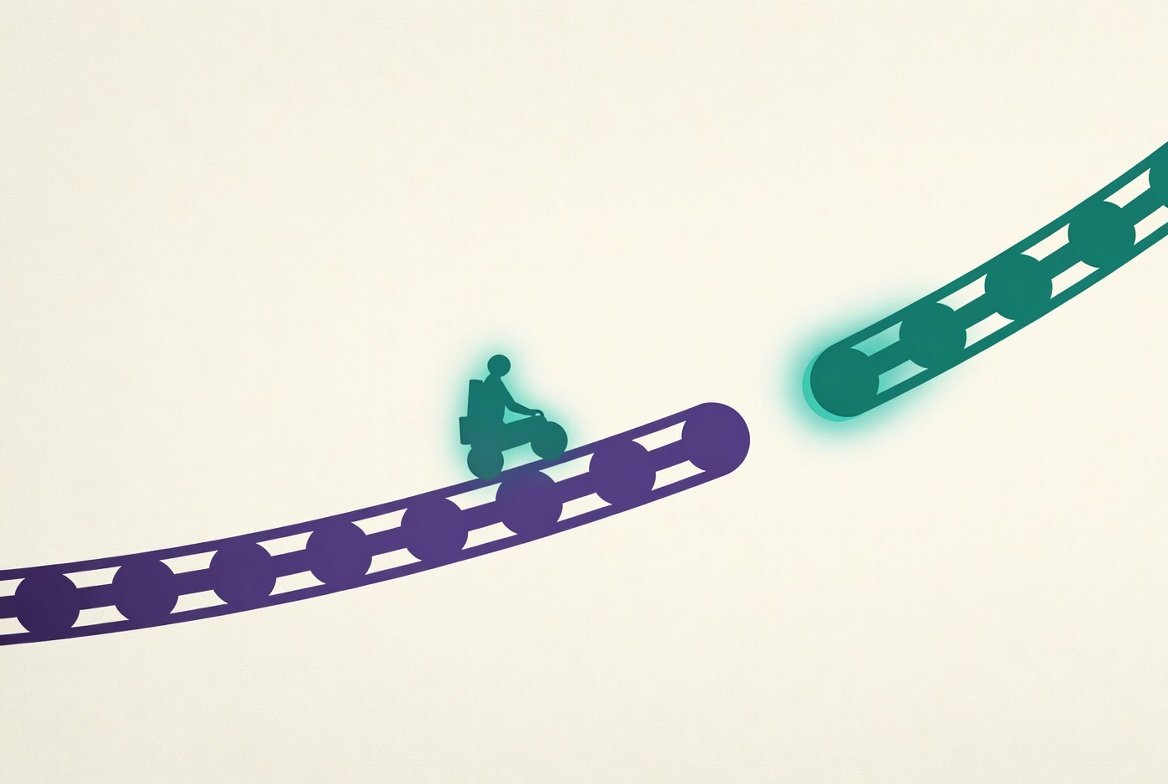
It can help to think of it like a moving walkway at an airport — you might not notice the motion at first, but it’s still carrying you somewhere. One small, seemingly insignificant step leads to another, and before long you’re standing in front of the addiction wondering how exactly you got there. Almost always, the answer is: one familiar step at a time.
Small Steps Matter More Than They Seem To
People tend to dismiss small routines as harmless — sitting in a particular chair, taking a specific route home, opening a certain app. None of those are problems on their own. But when they consistently lead toward the addiction, they deserve real attention. Small hinges move big doors.
Often the easier place to intervene isn’t the addiction itself — it’s earlier in the sequence. Instead of fighting the cigarette, change the coffee routine. Instead of fighting the urge to bet, avoid opening the app at all. The earlier you interrupt the chain, the less momentum you have to fight through.
Replacing the Anchor
Removing a habit creates a gap, and your brain doesn’t love empty space any more than nature does — which is exactly why replacement matters more than pure removal. Coffee → cigarette can become coffee → walk. Stress → vape can become stress → water and a few deep breaths. Boredom → phone can become boredom → reading. The replacement doesn’t have to be perfect. It just has to point somewhere healthier.
Most Habit Anchors operate completely outside conscious awareness until you start paying attention. For a few days, just watch: what happens right before the craving, what happens right before the behavior, what keeps repeating. Patterns tend to surface faster than people expect.
The Goal Isn’t Perfection
It’s normal to feel discouraged once you start noticing how many Habit Anchors you actually have. The goal was never eliminating every single trigger — it’s understanding the pathways. Every pathway you recognize becomes a pathway you can actually influence, and that awareness is where real options start to open up.
Pick one recurring behavior — not the addiction itself, but the step right before it — and ask what role it’s playing, where it usually leads, and what might shift if you changed just that one step. Addiction rarely shows up out of nowhere. It usually travels familiar roads, and the encouraging part is that roads can be rerouted.