Introduction
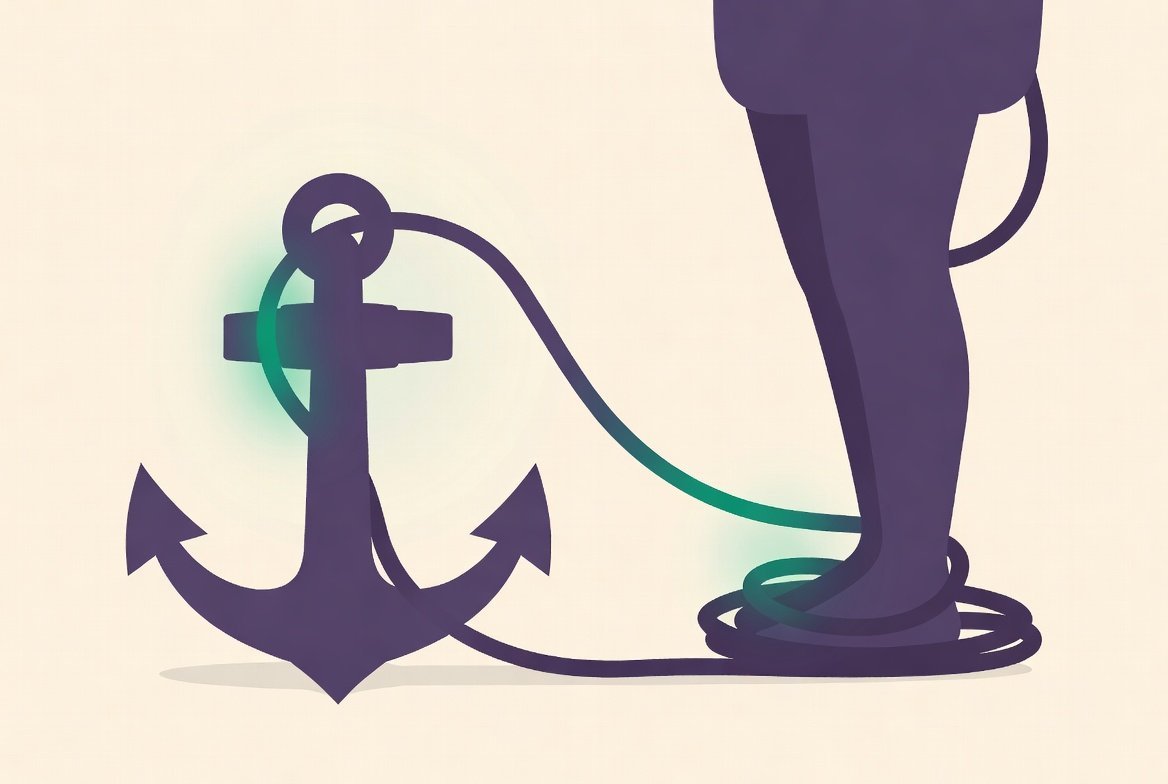
Not every anchor pulls you toward safety — some pull you toward familiar pain, keeping you attached to old identities, old mistakes, old wounds. One of the strongest is shame. People tend to think of shame as just a feeling, but it can actually function as an anchor: something that quietly shapes decisions, relationships, and self-worth. A Shame Anchor is a belief or memory that repeatedly pulls a person back toward self-condemnation — and shame has a strange habit of becoming the very thing that keeps the whole cycle alive.
What Shame Actually Is
At its core, shame is usually the belief that something is fundamentally wrong with you — not “I made a mistake,” but “I am the mistake.” That distinction matters, because mistakes can be corrected and lessons can be learned. Once someone believes they themselves are the problem, change starts to feel impossible by definition.
Guilt and shame aren’t the same. Guilt says “I did something that doesn’t align with my values” and points toward behavior — “I need to make this right.” Shame points toward identity — “I’ll never be right.” One tends to encourage growth. The other tends to encourage giving up entirely.
How Shame Becomes an Anchor
Most Shame Anchors start somewhere specific — a painful failure, a rejection, a betrayal, a harsh message repeated until it became believable. Over time, the shame stops feeling like a memory and starts feeling like reality. The thought quietly shifts from “something bad happened” to “this is who I am,” and the anchor becomes part of identity instead of staying a single event in the past.
Why Shame and Addiction Feed Each Other
One of the most destructive things about addiction is how easily it partners with shame — behavior, regret, shame, emotional pain, need for relief, behavior again. The addiction creates the shame, the shame creates discomfort, the discomfort fuels the addiction, and the cycle repeats. This is exactly why shame is rarely an effective recovery strategy — it tends to strengthen the very thing it claims to be fighting.
Shame rarely introduces itself honestly. It usually shows up disguised as familiar thoughts: “what’s wrong with me,” “I’ll never change,” “people like me don’t get better.” These thoughts feel convincing mainly because they’ve been repeated for years — repetition can make a story feel true even when it isn’t.
Why Shame Feels Like Honesty (It Isn’t)
A lot of people cling to shame because they mistake it for accountability — “if I’m hard on myself, I’ll change; if I stop criticizing myself, I’ll get worse.” Most people struggling with addiction aren’t actually short on self-judgment — they’ve usually already spent years doing plenty of that. Shame just disguises itself as honesty. Honesty and self-condemnation were never actually the same thing.
Living in the Past vs. Learning From It
Shame Anchors tend to attach themselves to moments that can’t be changed — the relapse, the lie, the missed opportunity — and the mind keeps replaying the same scene, as if enough repetition might somehow alter the outcome. It never does. The past can teach. It can’t be rewritten, and shame’s most damaging effect is how much it narrows the future, convincing people to expect failure before anything’s even happened.
Healing Shame Requires the Whole Truth
The fix for shame isn’t pretending mistakes never happened — it isn’t denial or excuses. Healing requires a more complete truth, one that includes responsibility alongside context, growth, and real possibility. The truth is rarely “I’m beyond hope.” It’s almost always more complicated than that, and usually a lot more hopeful too.
Releasing a Shame Anchor doesn’t happen overnight — it usually involves honest self-reflection, forgiveness, accountability, connection, and repeated acts of self-respect. The goal isn’t forgetting the past. It’s refusing to let the past become your permanent address.
The Bottom Line
Shame is a genuinely powerful anchor — but it isn’t an unbreakable one. You’re responsible for your choices, and you’re not defined by your worst moment. You’re accountable for your actions, and you’re not permanently trapped by them. The past deserves honesty. The future deserves a real chance — and recovery tends to become possible the moment people stop confusing shame with truth.