Introduction
Few words get used more often and understood less clearly than forgiveness. Forgiving others, forgiving yourself, seeking it, offering it, needing it — once addiction enters the picture, the whole idea gets complicated fast. How do I forgive myself for what I did, what if they never forgive me, can forgiveness coexist with real accountability? There’s no shortcut through any of this, but understanding what forgiveness actually is — and what it isn’t — makes the path a lot clearer.
What Forgiveness Is Not
One of the biggest misconceptions is that forgiveness requires denying reality — ignoring the damage, erasing consequences, pretending nobody got hurt. It doesn’t. Genuine forgiveness usually begins with honesty; the truth has to be acknowledged before real healing can happen. Forgiveness isn’t the absence of truth. Most of the time, it depends on it.
It’s also not the same as excusing — “it wasn’t that bad,” “it doesn’t matter,” “they shouldn’t be upset.” Real forgiveness doesn’t minimize harm. It recognizes the harm fully while choosing a response that isn’t driven entirely by resentment or endless self-punishment. Accountability and forgiveness aren’t opposites — they usually work together.
Why Forgiving Yourself Is So Hard
A lot of people find it easier to forgive others than themselves. The mind turns into a courtroom — evidence presented repeatedly, mistakes replayed, the sentence renewed every single day. “I should have known better,” “I ruined everything,” “I don’t deserve another chance” — these thoughts can feel justified, and they can also become real barriers to actually moving forward.
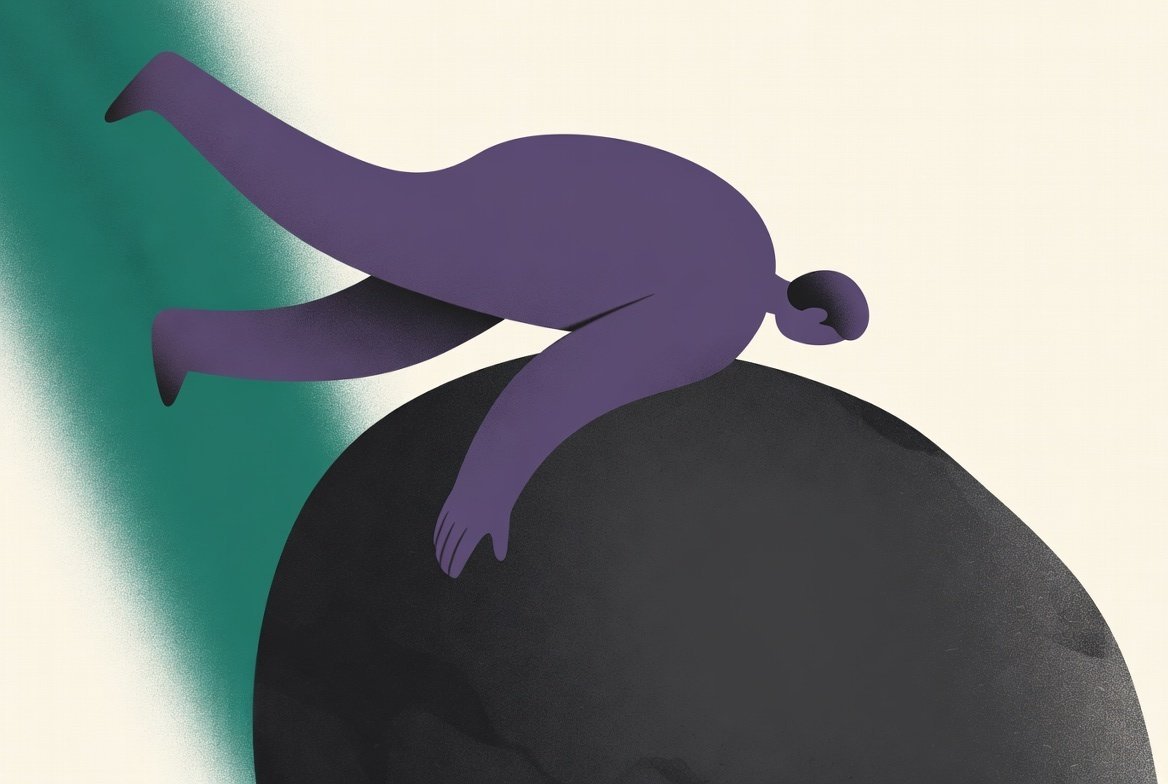
There’s a meaningful difference between learning from the past and living inside it. Learning asks, “what can this teach me?” Punishment asks, “how long can I make myself suffer for this?” One produces growth. The other produces stagnation — a lot of people unconsciously treat ongoing guilt as a kind of repayment, as if carrying it forever somehow repairs the damage. It rarely helps anyone, including the people who were actually hurt.
Some Consequences Stick Around — and That’s Okay
Forgiveness doesn’t always remove consequences, which can be a hard reality to accept. Relationships may need real time. Trust may need real rebuilding. Some opportunities may not return on your preferred schedule, or at all. Forgiveness isn’t a magic eraser — it’s a different way of carrying what already happened.
And forgiveness can’t be forced out of someone else. You can apologize, make amends, take responsibility, and change your behavior — but you can’t control another person’s timeline, demand their healing, or require their trust. Their journey belongs to them. Your responsibility is continuing to act with integrity regardless of how they respond.
Amends vs. Just Seeking Relief
Sometimes people apologize mainly to reduce their own discomfort, which is understandable but limited. Genuine amends focus more on the other person than on your own relief — taking real responsibility, listening honestly, repairing what’s actually repairable, and respecting whatever boundaries they set. Not every relationship can be restored. Every honest effort still matters regardless.
You Are Bigger Than Your Worst Chapter
Addiction often attacks identity — “I made mistakes” becomes “I am my mistakes,” and that shift creates real suffering. You’re responsible for your actions, and you’re also genuinely larger than your worst ones. The same is true of your best ones. A life is bigger than any single chapter, no matter how heavy that chapter feels right now.
Forgiveness usually isn’t dramatic in practice. More often it looks like telling the truth, taking responsibility, learning from mistakes, making different choices, and letting go of endless self-punishment — less a single feeling and more a practice, a decision you keep making over time.
The Bottom Line
Forgiveness isn’t forgetting, excusing, or pretending. It’s the decision to stop letting the past dictate the entire future. It can take real time, repeated effort, and uncomfortable honesty — but healing rarely happens without it. You don’t need to deny what happened. You just need to remember that what happened isn’t the whole story. The story is still being written.