Introduction
Life sometimes feels repetitive in a way that’s hard to put into words — not because Monday follows Sunday, but something deeper: the same argument with a different person, the same mistake under different circumstances, a new room that somehow has familiar furniture. Different walls, different lighting, same room. Eventually the question becomes unavoidable: why does this keep happening to me? The answer is often simpler, and more uncomfortable, than people expect — sometimes the pattern keeps repeating because nobody ever learned to recognize the door out of it.
The Rooms We Build Without Noticing
Some of the rooms that shape a life are physical. Most aren’t — they’re made of habits, assumptions, fears, beliefs, and unfinished lessons, and they become so familiar that people stop noticing them entirely. They just live inside them, until one day they wonder why the scenery never seems to change.
Human beings often prefer familiar pain to unfamiliar uncertainty, which sounds strange until you notice how often it actually happens — people returning to relationships that hurt them, behaviors that damage them, patterns that frustrate them. Not because anyone enjoys suffering, but because the known feels safer than the unknown, even when the known is causing real problems. The room may be uncomfortable. At least the furniture is familiar.
Different Face, Same Lesson
One of life’s stranger experiences is realizing the same lesson keeps returning — different job, same problem; different relationship, same conflict; different substance, same escape. It can feel like life is asking “have you learned this yet” — not as punishment, but as an open invitation. The lesson tends to keep returning because it’s still unfinished.
How Addiction Uses Familiar Rooms
Addiction thrives on repetition — the same triggers, the same responses, the same sequence. Something happens, a feeling appears, the pattern activates, and the room gets entered again. After enough repetitions, the path becomes automatic, and a person can find themselves halfway across the room before even realizing they walked through the door. That’s exactly why awareness matters so much — you can’t choose a different room if you never notice which one you’re standing in.
Sometimes the Problem Isn’t the Room — It’s Staying In It
A lot of people spend years trying to redecorate a room they should really just leave — moving furniture, repainting walls, renaming the experience — and somehow nothing fundamental ever changes, because the issue was never the furniture. It was the room itself. Recovery tends to begin once people stop asking “how can I make this room more comfortable” and start asking “why am I still here.”
Doors Are Usually Smaller Than Expected
A lot of people wait for some dramatic transformation — a grand revelation, a life-changing moment. Sometimes that happens. More often, change arrives through much smaller doors: a conversation, a decision, a boundary, a different response, a single honest admission. Tiny doors can lead to genuinely different rooms. The real challenge is just noticing them when they show up.
New rooms also come with real fear attached — uncertainty, different expectations, different responsibilities — and people sometimes stay trapped simply because certainty feels safer than freedom. The known problem can feel a lot less intimidating than the unknown future, even when growth genuinely requires leaving the room behind.
The Pause at the Doorway
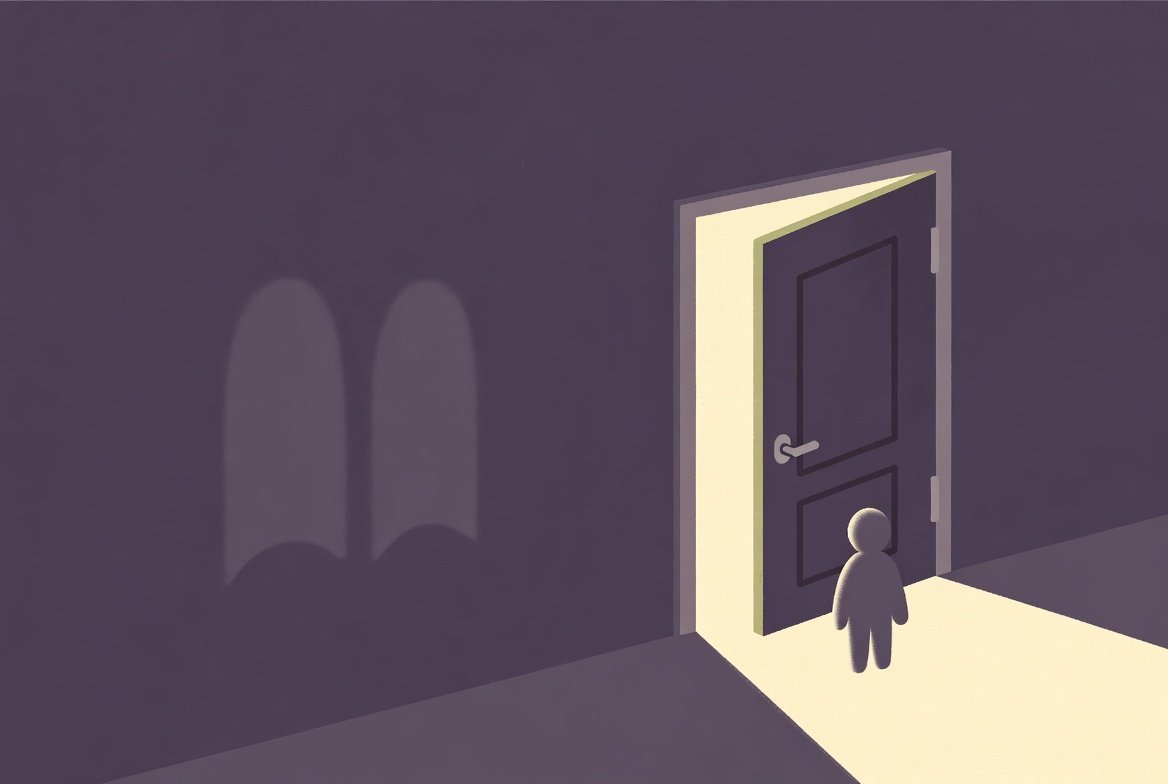
The most important moment usually doesn’t happen inside the room — it happens at the doorway, in the pause where awareness shows up: “I’ve been here before.” That realization is genuinely powerful, because once the room is recognized, a real choice becomes possible. Not guaranteed. Possible — and possibility is exactly where change tends to begin.
Not every room is a mistake, either — some are classrooms, holding real lessons, warnings, and perspective. The goal was never pretending the room never existed. It’s learning what it had to teach before actually moving forward, since a lesson fully learned usually doesn’t need to repeat itself.
The Bottom Line
A lot of people believe they’re trapped by circumstances, when really they’re trapped by familiarity — the same room, the same pattern, the same response, repeated until it starts feeling permanent. Permanence is usually an illusion, though. Awareness changes things. Honesty changes things. Different choices change things. You don’t have to spend the rest of your life walking into the same rooms — you just need to recognize the doorway, and pause long enough to decide whether you actually want to walk through it again.