Introduction
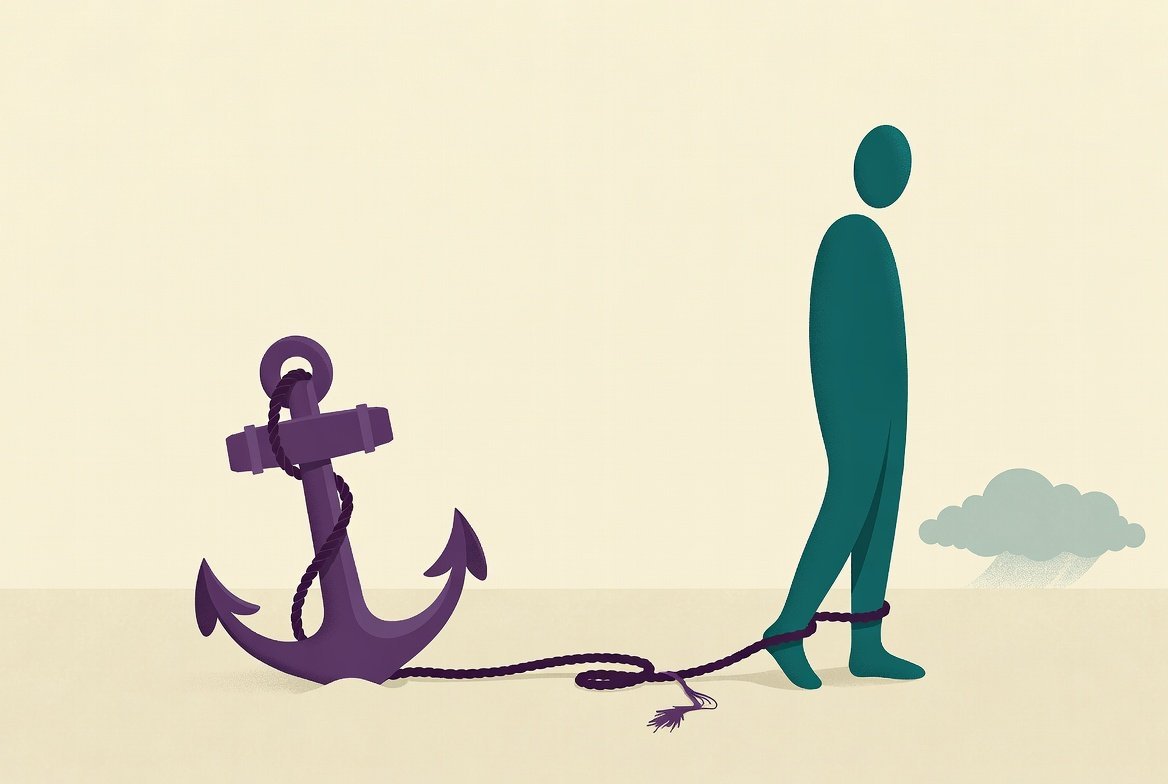
A lot of people assume withdrawal only matters while it’s actively happening — the symptoms appear, the discomfort arrives, the person gets through it, and then it’s over. Sometimes that’s true. Often the story is more complicated, because long after the physical symptoms fade, the memory of withdrawal tends to stick around — and that memory can become its own anchor: a reason to avoid quitting, a reason to delay change, a reason to return to a familiar pattern. We call this a Withdrawal Anchor: the remembered fear or expectation of withdrawal that keeps influencing behavior even when withdrawal itself isn’t actually happening.
The Relationship With the Memory, Not the Memory Itself
A Withdrawal Anchor isn’t withdrawal itself — it’s the relationship someone develops with the memory of it. “I can’t quit because the cravings will be unbearable,” “I remember how awful that felt,” “I never want to go through that again.” These thoughts feel powerful mainly because they’re based on real experience. The trouble is that the memory of discomfort can eventually grow stronger than the actual reality of it ever was.
Human beings are wired to avoid pain — generally a useful instinct, and the brain treats withdrawal the same way it treats any other unpleasant experience: it remembers, and the next time quitting becomes an option, that memory shows back up. The brain thinks it’s protecting you. The problem is it may also be protecting the addiction right along with you.
When Withdrawal Becomes Part of Your Identity
A lot of people stop describing withdrawal as something that happened and start describing it as who they are — “I can’t handle withdrawal,” “I’m not strong enough,” “quitting never works for me.” Notice the shift: from describing an event to describing a self. That’s exactly where Withdrawal Anchors get their real power.
Why the Fear Often Feels Worse Than the Real Thing
Anticipation is often more painful than the actual event — people imagine endless cravings and constant suffering, then recovery begins, and while genuinely difficult, it’s often not quite what they’d built up in their mind. The fear grows in the absence of real, direct experience, with imagination filling in the blanks, usually in darker colors than reality ever turns out to be.
Part of this comes from something called the peak-end effect — human memory tends to emphasize the most intense moments, often remembering the worst or final moment far more vividly than everything in between. Someone might remember one especially difficult withdrawal and unconsciously assume “that’s exactly how it’ll always be.” The brain simplifies. Reality is almost always more nuanced than the simplified version.
Not All Withdrawal Is Physical
People usually picture physical symptoms when they hear the word withdrawal, but a lot of it is emotional or psychological — restlessness, irritability, anxiety, boredom, loneliness, emotional sensitivity. Sometimes what feels like withdrawal is really just the return of feelings that had been numbed or avoided for a long time. Understanding that distinction tends to reduce a lot of unnecessary fear.
Withdrawal Is Temporary — and Why People Return Anyway
This may be the single most important fact in the whole picture: withdrawal is temporary. It can be intense, uncomfortable, and may genuinely require support, but it isn’t permanent. The brain adapted to addiction. It adapts to recovery too — the same ability that learned the old pattern can learn the new one.
A lot of relapses actually begin before the craving, before the trigger, before the substance — they begin with a thought: “I don’t want to go through withdrawal again.” The memory itself becomes persuasive enough on its own. The person isn’t chasing pleasure in that moment. They’re trying to avoid anticipated discomfort, which is exactly why Withdrawal Anchors deserve real attention rather than getting dismissed.
Weakening the Anchor Through Real Experience
The strongest way to weaken a Withdrawal Anchor is usually real experience — not reckless suffering, just lived proof: “I handled that craving,” “I made it through that hard day,” “I got through that week.” Each experience becomes its own evidence, gradually rewriting the story. Confidence grows, not because withdrawal disappears, but because the person learns firsthand that they can actually endure it.
It also helps to separate pain from danger — withdrawal can be painful without being dangerous, and a lot of people mistake discomfort for proof they should stop trying to recover. In reality, discomfort is often just evidence that real adjustment is happening. Difficulty doesn’t automatically mean something’s wrong. Sometimes it just means something’s actively changing.
The Bottom Line
Withdrawal Anchors gain strength mainly when they go unquestioned — when old memories quietly turn into permanent predictions. The truth is that withdrawal is an experience, not an identity, not a life sentence, and not proof that change is impossible. The discomfort is real. The adaptation is real. The recovery on the other side is real too. You don’t need to enjoy the process. You just need to remember that difficult was never the same thing as impossible.